Inzpire's newly accredited Compact Agile Simulation Equipment for joint terminal attack controllers (CASE JTAC) is advancing JTAC training by harnessing the immersive capabilities of mixed-reality (MR) technology. Departing from traditional virtual reality (VR) and dome projectors, CASE JTAC seamlessly blends real training aids with high-fidelity virtual battlespaces.
In this article, we hear from James Clarkson, Inzpire's lead engineer behind CASE JTAC's innovative development and Dan Campbell, one of Inzpire’s JTAC subject matter experts and Army reservist with first-hand experience as an operator.
From the technical and operational insights driving CASE JTAC's mixed-reality design to the game-changing benefits unlocked for fundamental JTAC skills, like battle tracking and target coordination, they explain why CASE JTAC delivers a new standard in simulator training.
James (CASE JTAC developer): MR technology has been developing since the 1990s but only became a truly viable product within the last three years, driven mainly by advances in gaming and mass-market computing technologies. While we were aware of the limitations of dome systems for years, the game-changing moment for CASE JTAC came with the release of Varjo’s XR4 automatic varifocal MR system - the first headset and camera solution to meet strict accreditation criteria.
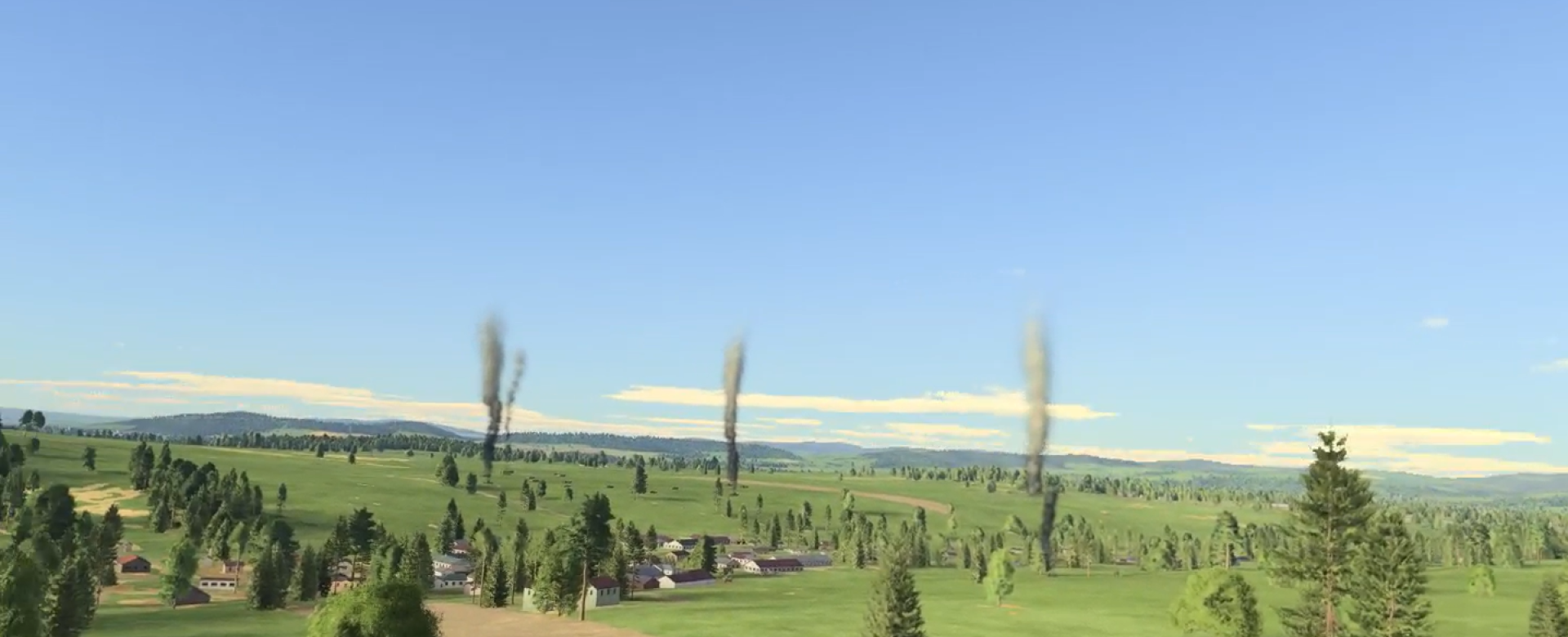
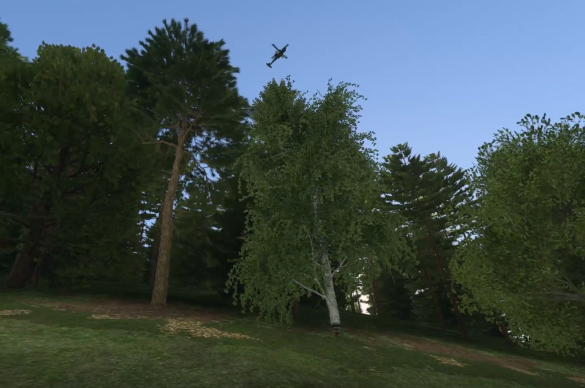
Dan (CASE JTAC operator): My initial experience of CASE JTAC was one of great excitement. Having rarely used VR or MR technology before, I approached it with a degree of scepticism, anticipating subpar graphics, jerky movements, and potential motion sickness. However, upon donning the headset, I was immediately captivated by the environment, constantly exploring my surroundings, from the grass beneath me to the trees behind. This experience proved far more immersive than any simulation I have encountered in the past, which typically relied on flat screens or semi-dome setups. In those instances, the sense of immersion would always break the moment I turned my head or shifted my gaze.
I was immediately captivated by the environment, constantly exploring my surroundings, from the grass beneath me to the trees behind.
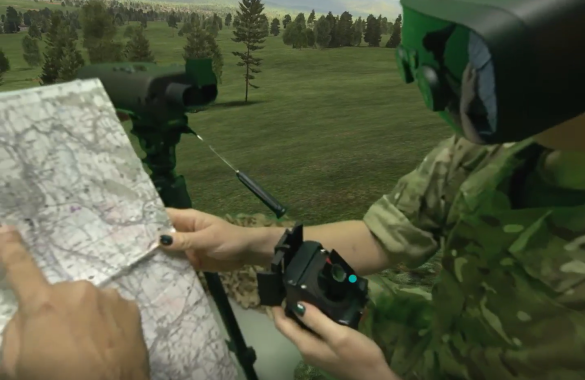
James: With traditional VR, users are fully isolated in the virtual world, unable to see their own hands and equipment. To be able to train with their real kit, that equipment must be precisely simulated and motion-tracked, which is extremely challenging even with expensive tracking systems where minuscule calibration issues can shatter the sense of realism.
In contrast, MR provides an immediately intuitive environment, where users can read maps, take compass bearings, watch UAV feeds, use viewing optics and see their teammates. This vastly reduces workload and stress levels at a subconscious level and removes the need to train users on how to use the simulator.
Dan: Interaction with the equipment is one of CASE JTAC's greatest strengths. It typically takes around 30 seconds for my brain to adjust to the slight variance between the real world and the display, and overall, the accuracy is excellent. The ability to build muscle memory is a critical factor in becoming a proficient operator. This allows users to dedicate more time to practising, rehearsing, and preparing for training, rather than relearning equipment functions or wasting time correcting errors.
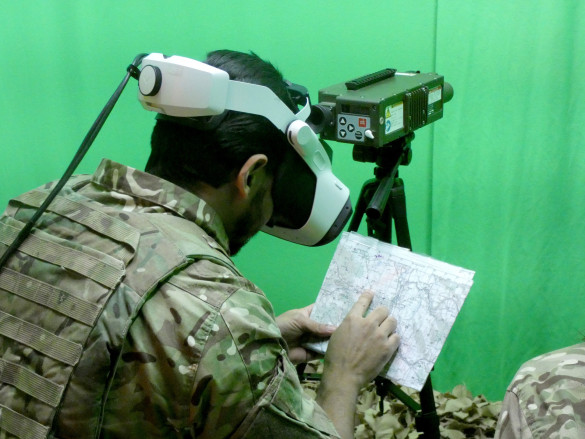
James: Advancements in consumer tech like smartphones and gaming have made key simulation components like headsets, PCs and software much more affordable, paving the way for high-end yet cost-effective systems like CASE JTAC.
By deeply understanding how and why each hardware and software component functions, our team can seamlessly integrate them in innovative ways to meet our customers’ specific training requirements. This is further enabled by our close technical partnerships with key suppliers like headset maker Varjo, virtual battlespace software provider Bohemia Interactive Solutions, and SAF-Fires simulation experts SimCentric.
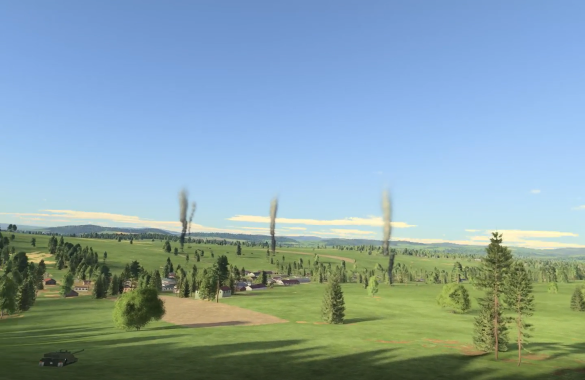
Dan: Situational awareness is significantly enhanced, as users can naturally look around the full 360 degrees exactly as in the real world, without relying on controls to change perspective. Within scenarios, movement can be observed and monitored, making skills like battle tracking straightforward to rehearse - something that is notoriously difficult in traditional simulators.
Another key contributor to the system's immersion is the seamless transitioning between viewing near objects and engaging far targets. Targets observed at range are scaled correctly, replicating real visual perception for an authentic sense of depth. This enhances skills like map-to-ground correlation and supports precise scenario design. Visual fidelity isn’t constrained by display resolution or processing limitations. Where necessary, terrain profiles can also be modified to meet specific training requirements, ensuring flexibility without compromising realism.
To my knowledge, no other system is as well-suited for developing these fundamental JTAC abilities.
CASE JTAC's portability is a defining advantage.
Dan: Two critical factors for simulator effectiveness are accessibility and location - even advanced systems provide limited value if operators cannot readily access them. CASE JTAC's portability is a defining advantage, as the compact system fits in a standard classroom for easy setup requiring just tables and power. It could also deploy via a mobile trailer for even quicker training cycles.
James: This portability is achieved through the system’s compact size, ruggedness, and the speed and ease of calibration. The headsets are much smaller and easier to calibrate than projection systems that can require expensive automatic calibration equipment. Though important for deployment, ruggedisation can often compromise other factors like size, cost, cooling and power. So, we focused on striking the right balance between portability, ruggedness and performance.
Dan: Ideally supported by a team that can efficiently develop bespoke scenarios - which Inzpire can also provide - the ability to deliver training directly to the user substantially increases accessibility and effectiveness, particularly for operational JTACs with limited downtime.