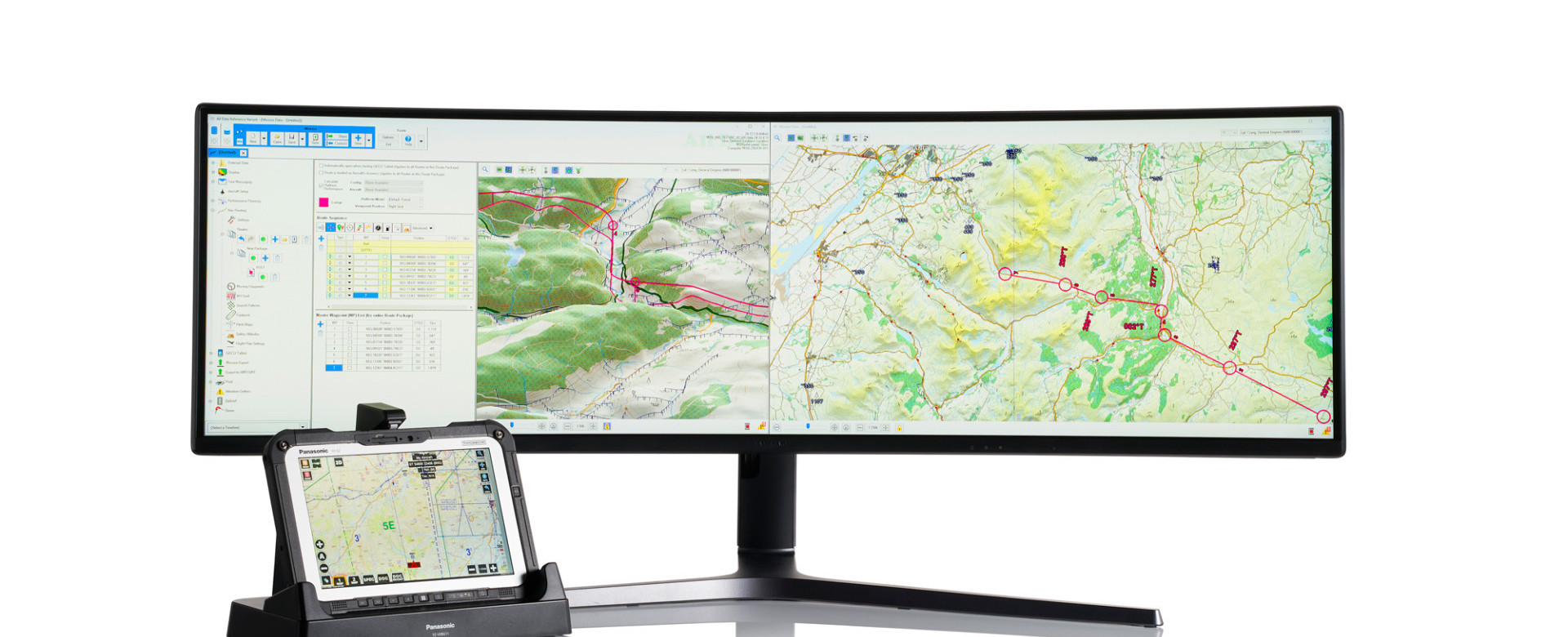
Our Mission Systems Division has been producing GECO, a cutting-edge mission support system, for over 15 years. Successfully fielded on more than two dozen platforms around the world, GECO comprises a mission planning and debrief system coupled with an advanced airborne tablet and military electronic flight bag.
We’ve won the confidence of militaries from Europe to Asia and the Americas, as well as several of the world’s largest defence primes. This is thanks to our experienced and dedicated team: our engineering and safety experts who ensure that we field a product with a high degree of safety assurance; and our former aviators who bring a critical user perspective to the product.
So, how do we ensure that we continue to adapt to surpass the evolving requirements of our military customers and the rigorous demands of the operational environment? We interviewed Head of User Experience, John Sweet to find out.
We cater for all phases of a military aviator’s mission set. This provides a unique set of challenges. We support peacetime training in the same way as a commercial electronic flight bag, by conducting tasks such as displaying NOTAMs or filing a flight plan on our mission support system tablet. At the same time, we must also be able to support high-end military operations, such as ensuring a multi-aircraft strike package is deconflicted and routed through an integrated air defence system on our mission planning and debrief system. We also incorporate mission rehearsal and debrief functions into the mission planning environment, allowing users to maximise their operational effectiveness but also get the most from every training hour available.
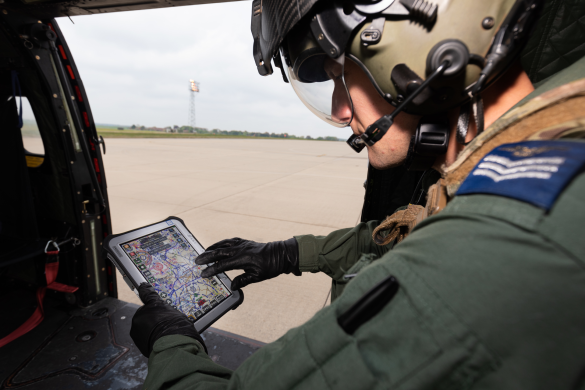
Finally, we provide robust equipment to end-users who work in the most demanding of conditions by being hardware-agnostic and supporting a range of devices from a mounted solution in a fast-jet cockpit controlling aircraft sub-systems, to a handheld tablet capable of operating at 50 degrees Celsius in a dust-filled helicopter cabin.
Much as we’d love to, we don’t have a monopoly on great ideas in the aviation industry. However, our dedication to working collaboratively with other providers, our rapid development cycle and our modular software allows us to integrate with other systems quickly and cost-effectively.
Our systems have diverse capabilities, such as calculating aircraft performance using a third-party software module during the planning cycle and receiving data from a third-party ADS-B receiver in flight, all the way up to controlling aircraft systems directly from our tablet-based mission support system.
Our dedication to working collaboratively with other providers, our rapid development cycle and our modular software allows us to integrate with other systems quickly and cost-effectively.
We’ve found that embracing cooperation with third-party teams - working closely with both them and our end-users during our software development cycle - brings a result that provides a well-integrated but flexible solution for the end-user. Rather than switching between apps to try and understand the whole picture, a user can operate in a single piece of software. This reduces workload and training burdens, while avoiding the traditional negative implications that a single piece of software can bring, such as an inability to integrate third-party data or a new type of hardware.
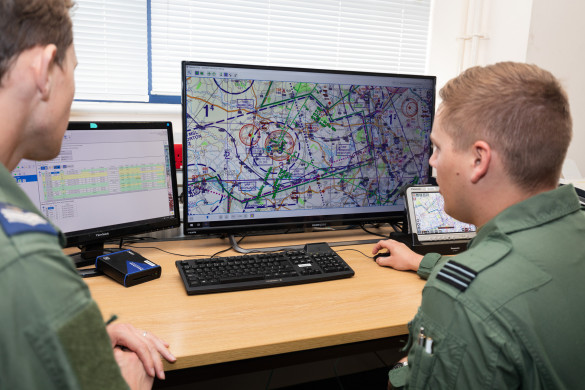
We recognise that some end-users already have products that are key to their day-to-day operations. For example, they might have an existing aircraft with heavily invested, capable systems, though they might not be getting the most from their planning and debriefing software. By integrating with existing flight data recorder software, we can enable debriefing with a full download of every parameter available from the aircraft, providing post-flight highlighting of exceedance of aircraft limits; a time-synchronised video replay; a full 3D flythrough of the mission and vital engineering insights, rather than just a simple GPS trace.
Additionally, to help our crewed platform users expand support to uncrewed systems, we can enable the planning and control of third-party UAS within their existing GECO system. This means they can effectively coordinate their operations, rapidly onboard a new capability and minimise their training burden.
Several of our customers use GECO across multiple aircraft types. Through our modular approach, we can maintain a common software version across the customer’s aircraft types, whilst tailoring individual features and modules to a particular requirement unique to a specific platform.
Case study 1
An Inzpire customer uses GECO as their mission planning and debrief system in a training environment but also on their frontline aircraft. We provide a common core of features across all these types, meaning that junior aircrew arriving at the front line are already very familiar with GECO. They only need to learn a few additional features that will add value to the higher end flying conducted on operations. At the same time, the aircraft performance calculations and mission export modules have a similar look and feel across all their aircraft types, while providing type-specific output. This effectively means that a mission commander of a complex multi-type operation can look at a limitation of another platform on GECO and quickly assess the problem to find a solution with one of their other assets.
Case study 2
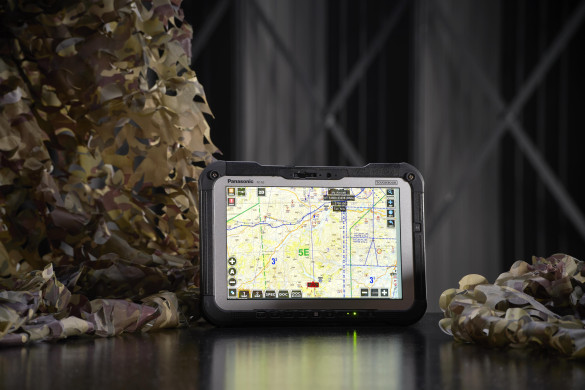
Another customer fields GECO’s tablet-based mission support system across several of their aircraft fleets. They gained significant logistical support and a cost reduction as we worked with them to supply common hardware and software to their fleets. All tablets are equipped with the same version of software, with the end-user selecting the correct aircraft type on login. This also means that on deployed operations where aircraft are operating together, a common interchangeable pool of deployed equipment can support all the aircraft types present.
One of our customers had a requirement to reduce the risk of mid-air collision during their training sorties. While GECO’s beyond-line-of-sight (BLOS) feature already allowed their other GECO-equipped aircraft to be tracked in real time, the customer wanted to be able to detect civilian aircraft operating in the same airspace. As a result, we worked closely with a third-party company to produce an industry-leading, commercial-off-the-shelf, walk-on ADS-B receiver to integrate their receiver with GECO. When combined with the reception of offboard data from other systems, GECO’s own BLOS feature and the ability to receive automatic identification system (AIS) signals from maritime traffic, this provides a single situational awareness picture for an operating crew.
During development with the third-party company, we also recognised that their product provided an additional opportunity to enhance data sharing across the aircraft. We took the opportunity to work with them to refine an existing GECO feature that would reduce the number of steps required to achieve a data-sharing task for our users.
As many of our customers have never operated a highly flexible mission planning or navigation system, GECO can revolutionise their operational situational awareness. Our team can help a customer develop their existing tactics, techniques and procedures to take full advantage of this new capability.
We always provide face-to-face training alongside GECO deliveries and updates, either as a train-the-trainer package or, by preference to all, directly to the users. Depending on the scale of the system provided, this could be a two-day course, or a week-long package delivered several times. Our field service representatives travel all over the world to deliver courses to our end-users – within the last 18 months alone, we’ve delivered GECO training in the UK, Asia, Eastern Europe and South America. This face-to-face training also allows our field service reps to build a strong relationship with the user community, so when someone calls, messages or emails the GECO support line, they often know who they’re talking to at the other end.
Our close relationship with our customers keeps us relevant in the face of a rapidly changing operational environment.
For many of our customers, we provide a data service, allowing users to receive a monthly digital pack-up of the latest aviation data direct to their GECO systems, from either military or commercial sources. We also provide a live augmented NOTAM service with global coverage, providing a clear, accurate picture of temporary airspace restrictions and other hazards. Both combined can significantly reduce the support burden for customers.
However, our system also allows customers to manage their own data if they require. We have a team of former military support staff that provide expertise to geospatial or operations teams to ensure the customer has the ability to operate independently to retain full control of sensitive military information.
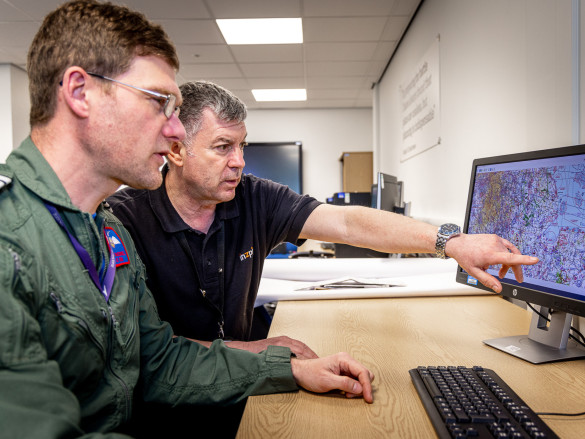
We maintain close links with our user community and the wider defence industry. Our team at Inzpire, the wider QinetiQ Group and our industry partners have world-leading operational and engineering expertise, but nothing can compare to the inspiration given by our frontline users. Every time we visit an operational unit, we see our software being used in new ways that lead us to adjust a feature to suit a novel use-case or push ourselves to develop an entirely new feature. Military aviators from all countries are also an incredibly forthright bunch and will happily tell you when you can produce a better solution for them, especially over a beer!
As I write this, some of our team members are on site with a new customer’s test and evaluation team, where they are conducting a flight trial. We’ve worked closely with the customer in the lead up to the trial to ensure that our implemented customisations meet their requirements. Now, our flight trial team will work with them further to tweak existing settings between sorties on site, helping them get the most out of their new kit and the customisations available and in this case successfully boosting the situational awareness GECO can provide during aerobatics.
Our close relationship with our customers keeps us relevant in the face of a rapidly changing operational environment. Demand for our software has never been higher thanks to our flexibility and pace of change compared to traditional aviation development cycles. All, while still providing robust, relevant and well-engineered software that instils user confidence as a “go-to-war” solution.