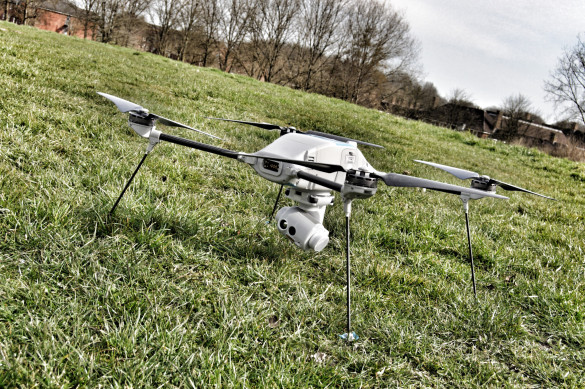
Led by Lockheed Martin Skunk Works®, Project TIQUILA sees more than 250 portable and packable mini drones delivered to the UK Armed Forces.
As Inzpire’s remotely piloted aircraft system (RPAS) experts embark on further delivery of operational and maintenance training to the British Army as part of the project, we hear from the team on their pivotal role preparing the frontline for use of the drones.
Our instructors bring a rare blend of experience across the full uncrewed aerial systems (UAS) spectrum. Members of our team have previously crewed the MQ-9 Reaper, delivering strategic intelligence, surveillance and reconnaissance (ISR) on numerous overseas operations, while others deployed in infantry roles on Tier 1 special forces tasks. On the ground, they employed a mix of first-person view (FPV) drones, one-way attack systems and hand-launched RPAS to provide both ISR and rapid precision effects.
A major innovation at the time was the use of RPAS to adjust artillery and mortar fire, turning area weapons into precision strike tools at minimal cost. This shifted Army doctrine, reshaped training at the Mortar School in Warminster and later informed wider changes after live demonstrations to senior commanders at the Infantry Battle School in Brecon.
Those events helped to drive updates to key courses from Section Commanders through to Platoon Commanders, embedding RPAS into mainstream Army tactics and modernising longstanding tactical training procedures.
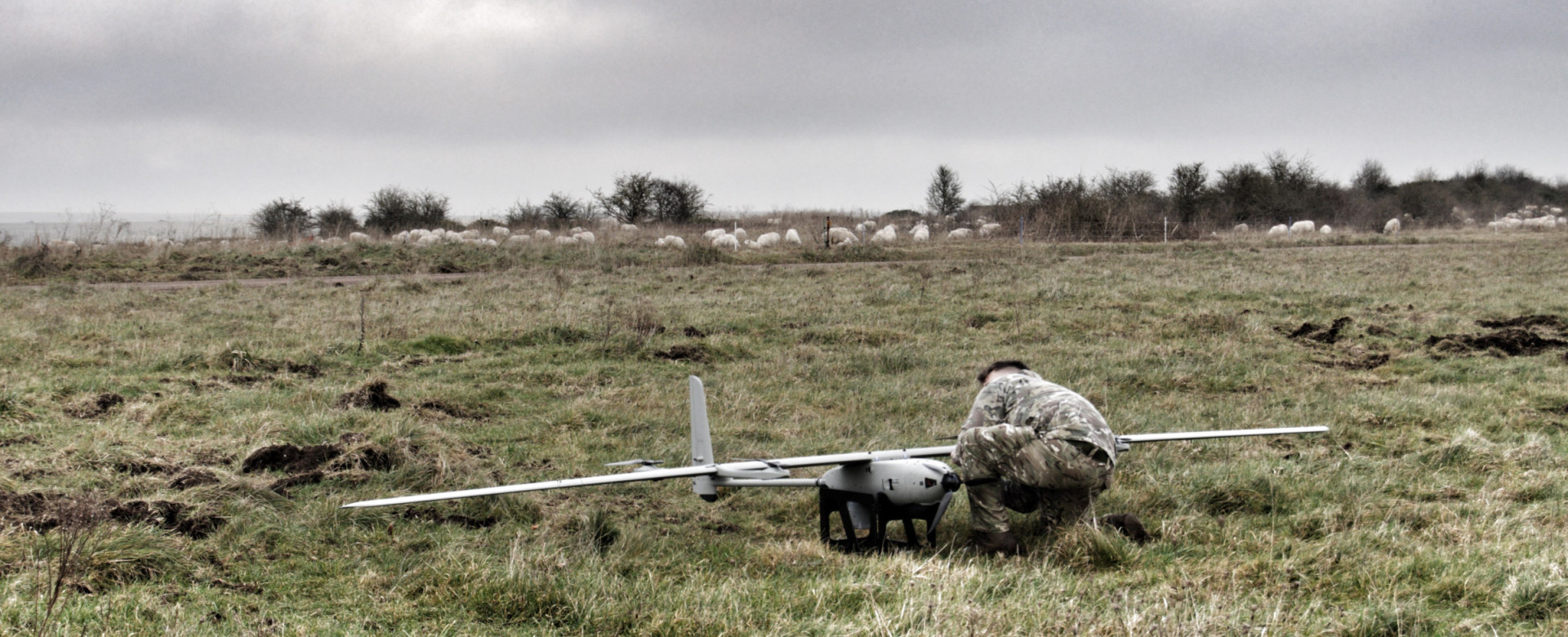
When members of the Inzpire team are integrated into the British Army’s 32 Regiment Royal Artillery delivering training for TIQUILA, each day follows a structured rhythm.
Mornings open with a debrief and revision of previous sorties, followed by a student-led weather brief and a detailed safety/airspace authorisation review. Training then moves into the field, where students work in pairs to conduct progressive sorties, trying to achieve the specific Key Learning Points for that serial, with each increasing in complexity.
As operators, the students are trained to set up the UAS equipment, (Ground Control Station, short-range antenna, medium-range antenna and build the UAV). In order to operate the UAS safely, the students are taught to work as a team and always maintain situational awareness.
After each day's training, the equipment is accounted for and packed away, following instructor-delivered immediate and detailed debriefs. The students are also taught how to maintain the UAS from battery charging to completing the 700-series maintenance logs to track airframe hours, frequencies and serviceability. The day closes with airspace deauthorisation, final paperwork and a group debrief back at camp. This routine blends operational realism with disciplined technical practice.
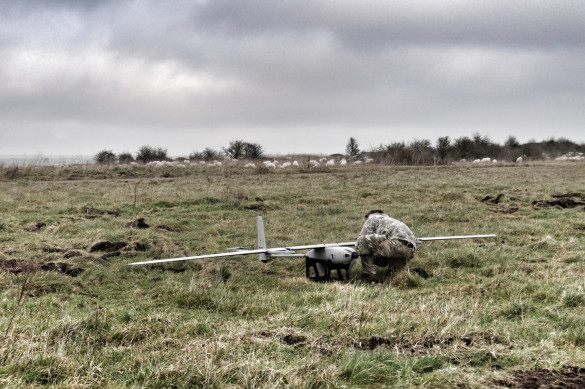
Student backgrounds vary widely; some are brand new to RPAS, while others are already progressing on their learning journey. The challenge has been tailoring the delivery of the course to enable all to succeed, regardless of what stage they are at. Instructors adjust the language and course complexity to match the group, while maintaining high standards throughout. Another challenge is replicating the tempo and decision-making of operations in a safe training environment. Here, instructors inject scenarios based on true-to-life deployments, ensuring military personnel gain experience in making rapid, informed choices while under pressure.
TIQUILA is a step-change for Army ISR. By putting advanced sensors into the hands of tactical commanders, it bridges the gap between large strategic platforms and frontline needs.
Inzpire’s instructors understand where this system sits in the wider battlespace because they’ve worked across every tier of uncrewed capability, from Reaper to FPV. That perspective allows Inzpire to train soldiers not just to operate the system, but also to integrate it with other assets (one likelihood being Project ZODIAC), exploit its strengths, and mitigate its limits. In doing so, integrating the TIQUILA systems becomes more than operating a UAS. It’s a catalyst for embedding uncrewed systems into how the Army fights.
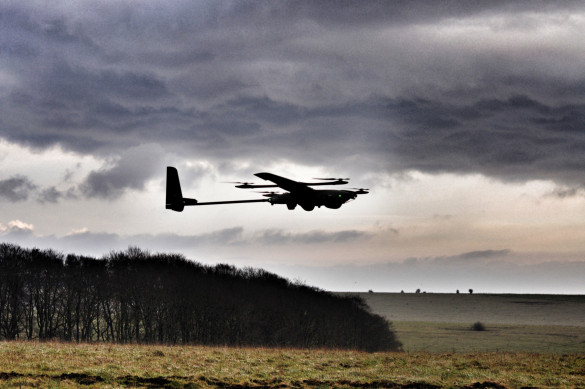
The next 12 months will likely see the systems evolve with updated comms, interfaces, propulsion mechanisms, power systems and potentially new payloads. Inzpire will be at the forefront of validating these changes and converting them into updated courseware. All training will remain compliant to JSP 822 and Defence Systems Approach to Training frameworks, ensuring it meets MOD standards as the platform matures.
Our instructors stay current in both Military Aviation Authority (MAA) and Civilian Aviation Authority (CAA) controlled airspace. They utilise TIQUILA assets in the MAA airspace via course delivery, research and development, or reservist activity. Additionally, they maintain currency in CAA airspace using company-owned assets under Inzpire’s PDRA01 Operational Authorisation.
Being highly skilled across operating environments, not only can we train today’s operators, but we can also maintain their currency across every iteration. Therefore, supporting the Army to be confident and adaptable as technology continues to advance rapidly.
Members of our team are exhibiting at the Global Defence Aviation conference in Warsaw in Poland this week. If you're visiting, please visit us there to discuss our RPAS training and consultancy services.